
Table of Contents
ToggleA flat knitting machine is a valuable investment for textile manufacturers producing sweaters, collars, cuffs, and knitted garments. However, continuous operation, yarn lint, worn needles, and improper lubrication can affect machine performance and fabric quality.
Regular flat knitting machine maintenance helps prevent unexpected breakdowns, reduce production downtime, and extend machine service life.
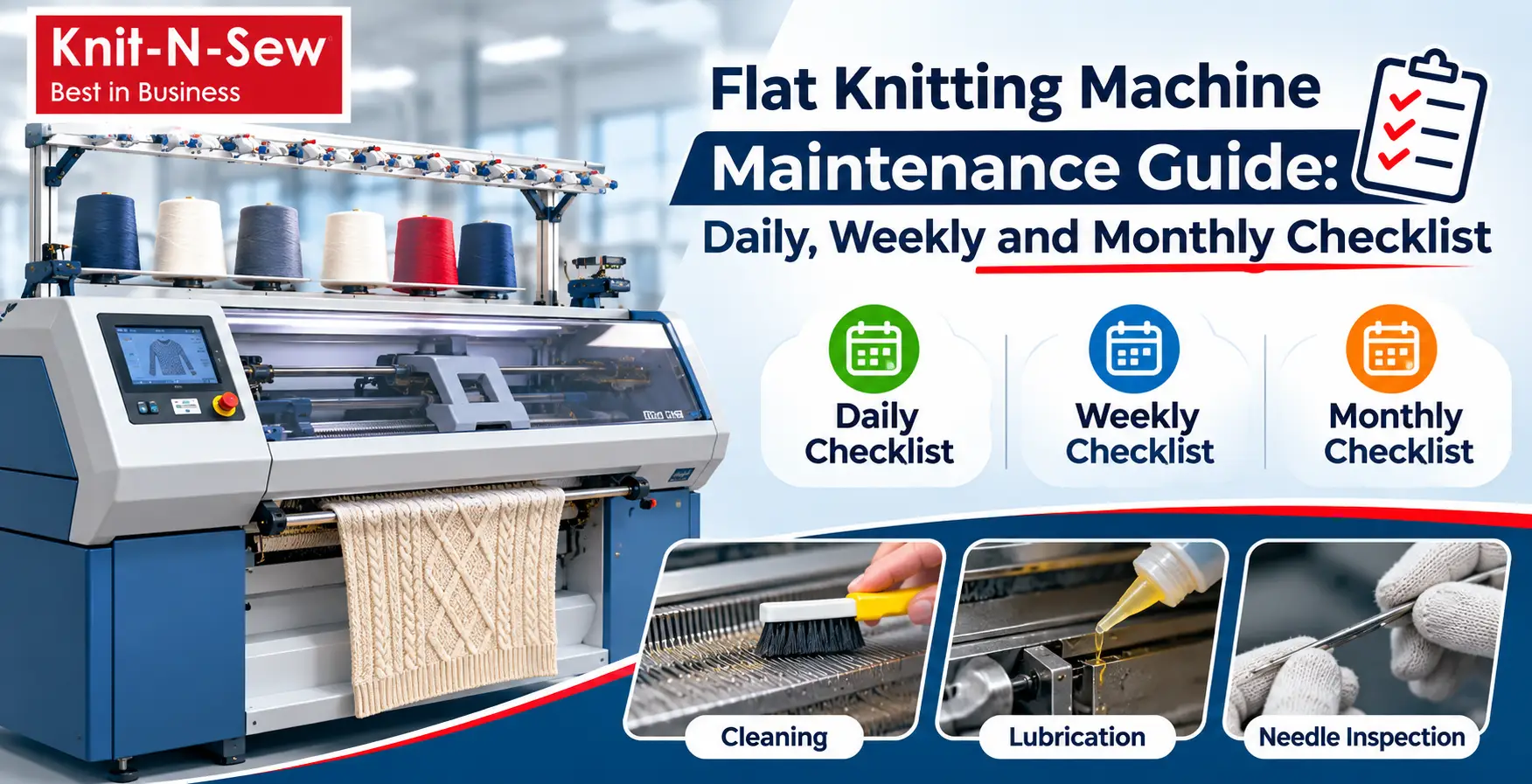
The best way to maintain a flat knitting machine is to follow a structured daily, weekly, and monthly schedule covering cleaning, lubrication, needle inspection, carriage movement, and electrical system checks.
This guide explains the essential maintenance tasks for computerized flat knitting machines used in textile manufacturing.
Why Is Flat Knitting Machine Maintenance Important ?
A computerized flat knitting machine contains several interconnected components, including the needle beds, knitting carriage, yarn feeders, needles, selection jacks, and electronic controls.
When these components are not maintained properly, manufacturers may experience:
- Frequent yarn breakage and dropped stitches
- Damaged or broken knitting needles
- Uneven fabric quality
- Excessive machine vibration or unusual noise
- Unexpected production stoppages
- Higher repair and replacement costs
Preventive maintenance helps identify developing problems before they interrupt production.
Daily Flat Knitting Machine Maintenance Checklist
Daily maintenance is essential for factories operating machinery for long shifts. Operators should inspect the machine before production and clean accessible areas at scheduled intervals.
1. Clean the Needle Bed and Yarn Feeding Area
Remove accumulated lint, loose yarn, and dust from the needle beds, yarn guides, feeders, and accessible carriage areas.
Use manufacturer-approved cleaning tools to avoid damaging delicate components.
2. Inspect Knitting Needles and Jacks
Check for visibly bent needles, damaged hooks, sticking latches, and worn selection jacks.
Defective components can cause dropped stitches, holes, and knitting errors.
If replacement is required, use compatible flat knitting machine needles and jacks that match the machine model and gauge.
3. Check Lubrication
Inspect the lubrication system, oil levels, and designated lubrication points.
Use only the lubricant specified by the machine manufacturer and follow its recommended operating-hour intervals.
Avoid excessive oiling, which can contaminate yarn and fabric.
4. Monitor Carriage Movement
During normal operation, observe the knitting carriage for unusual noise, vibration, resistance, or unexpected interruptions.
Stop the machine and arrange an inspection if abnormal movement occurs.
Daily Checklist
- Remove lint and loose yarn
- Inspect needles and selection jacks
- Check yarn feeders and tension
- Verify lubrication status
- Observe carriage operation
- Check for unusual noise or errors
Weekly Flat Knitting Machine Maintenance Checklist
Weekly maintenance focuses on components that require closer inspection beyond routine cleaning.
1. Inspect Carriage and Cam Systems
Check accessible carriage components, cam-related mechanisms, and guide surfaces for wear or contamination.
Any internal adjustment should be performed by qualified personnel according to the machine manual.
2. Check Yarn Feeders and Tension Devices
Inspect yarn guides, tension devices, and feeder movement to ensure smooth yarn delivery.
Incorrect tension can cause fabric irregularities and yarn breakage.
3. Examine Drive and Moving Components
Check accessible belts, guide rails, and moving assemblies for abnormal wear or looseness.
Follow the manufacturer’s service instructions before making adjustments.
4. Review Lubrication and Cleaning Records
Confirm that operating-hour-based lubrication tasks have been completed and recorded.
Weekly Checklist
- Inspect carriage components
- Check yarn feeder condition
- Examine accessible drive components
- Inspect guide rails
- Verify lubrication records
- Review recurring machine errors
Monthly Flat Knitting Machine Maintenance Checklist
Monthly maintenance should involve a more detailed assessment by a trained technician.
1. Inspect Needle Beds and Knitting Components
Examine needle beds, needle channels, selection jacks, and related mechanisms for excessive wear or damage.
Replace components that fail inspection using compatible knitting machine spare parts.
2. Check Electrical and Control Systems
A qualified technician should inspect relevant electrical connections, cooling filters, sensors, and control-system conditions according to the manufacturer’s instructions.
Electrical enclosures must only be opened after proper isolation by authorized personnel.
3. Examine Machine Alignment and Performance
Check for signs of abnormal carriage movement, knitting inaccuracies, or mechanical misalignment.
Do not alter machine timing or alignment without approved technical procedures.
4. Conduct a Production Quality Test
Run a representative knitting pattern and inspect the finished sample for stitch consistency, holes, dropped stitches, and visible fabric defects.
Compare results with your normal production standards.
Monthly Checklist
- Inspect needle bed condition
- Review component wear
- Check cooling and electrical systems
- Assess carriage performance
- Test fabric quality
- Update maintenance and replacement records
Important: These checklists are general planning guidelines. Exact servicing frequencies depend on the machine model, operating hours, workload, and manufacturer instructions. Always switch off, isolate, and secure the machine before maintenance that exposes moving or energized parts.
Common Flat Knitting Machine Problems and Solutions
Even with regular maintenance, knitting machines may develop operational issues.
| Problem | Possible cause | Recommended action |
| Yarn breakage | Incorrect yarn tension or damaged guides | Inspect yarn path and tension settings |
| Dropped stitches | Damaged needles or incorrect knitting settings | Inspect needles and verify settings |
| Uneven knitting | Needle wear or inconsistent yarn feeding | Check knitting components and yarn supply |
| Carriage noise | Mechanical wear or lubrication issues | Stop and request technical inspection |
| Oil stains | Excess lubricant or leakage | Check lubrication system |
| Frequent machine stops | Sensor, yarn-feed, or control faults | Review error codes and service instructions |
Persistent problems should be diagnosed by trained technicians instead of repeatedly restarting the machine.
How to Extend the Life of a Flat Knitting Machine
To improve reliability and maintain consistent production, textile manufacturers should follow these practices:
- Maintain a cleaning schedule: Prevent yarn lint and dust from accumulating around sensitive components.
- Use compatible spare parts: Select needles, jacks, and other components based on the machine’s specifications.
- Follow lubrication instructions: Use approved lubricants at the correct intervals.
- Train machine operators: Ensure operators understand routine checks and machine warning signals.
- Maintain service records: Track breakdowns, component replacements, and maintenance dates.
Proper maintenance is particularly important for factories running computerized flat knitting machines during peak sweater production periods.
Why Choose Knit N Sew Enterprises for Flat Knitting Machinery and Spare Parts?
Knit N Sew Enterprises, based in Ludhiana, Punjab, supplies industrial knitting machines, needles, jacks, and related components for textile and hosiery manufacturers.
The company offers machinery solutions and technical support for manufacturers seeking reliable knitting operations.
Whether you are planning to invest in a flat knitting machine or require compatible replacement components, selecting the right equipment and maintaining it correctly are essential for uninterrupted production.
Explore our flat knitting machines or flat knitting machine needles and jacks to learn more.
Frequently Asked Questions
1. How often should a flat knitting machine be maintained?
A flat knitting machine should undergo routine daily checks, more detailed weekly inspections, and periodic monthly servicing. Lubrication and component maintenance must also follow the manufacturer’s operating-hour schedule.
2. What is the best way to clean a flat knitting machine?
Use manufacturer-approved cleaning tools to remove lint, dust, and loose yarn from accessible needle beds, feeders, and carriage areas. Avoid excessive compressed air or cleaning methods that may push debris into sensitive mechanisms.
3. Why do flat knitting machine needles break?
Needle breakage may result from damaged needle channels, incorrect settings, yarn problems, component wear, or mechanical interference. Identify the cause before replacing damaged needles.
4. Which oil should be used for flat knitting machine maintenance?
Use only the lubricant recommended for your specific flat knitting machine model. Different components may require different oils or greases, so universal oil recommendations should be avoided.
5. How can manufacturers reduce flat knitting machine downtime?
Regular cleaning, timely lubrication, operator training, compatible spare parts, and preventive inspections can help reduce avoidable stoppages and maintain production consistency.