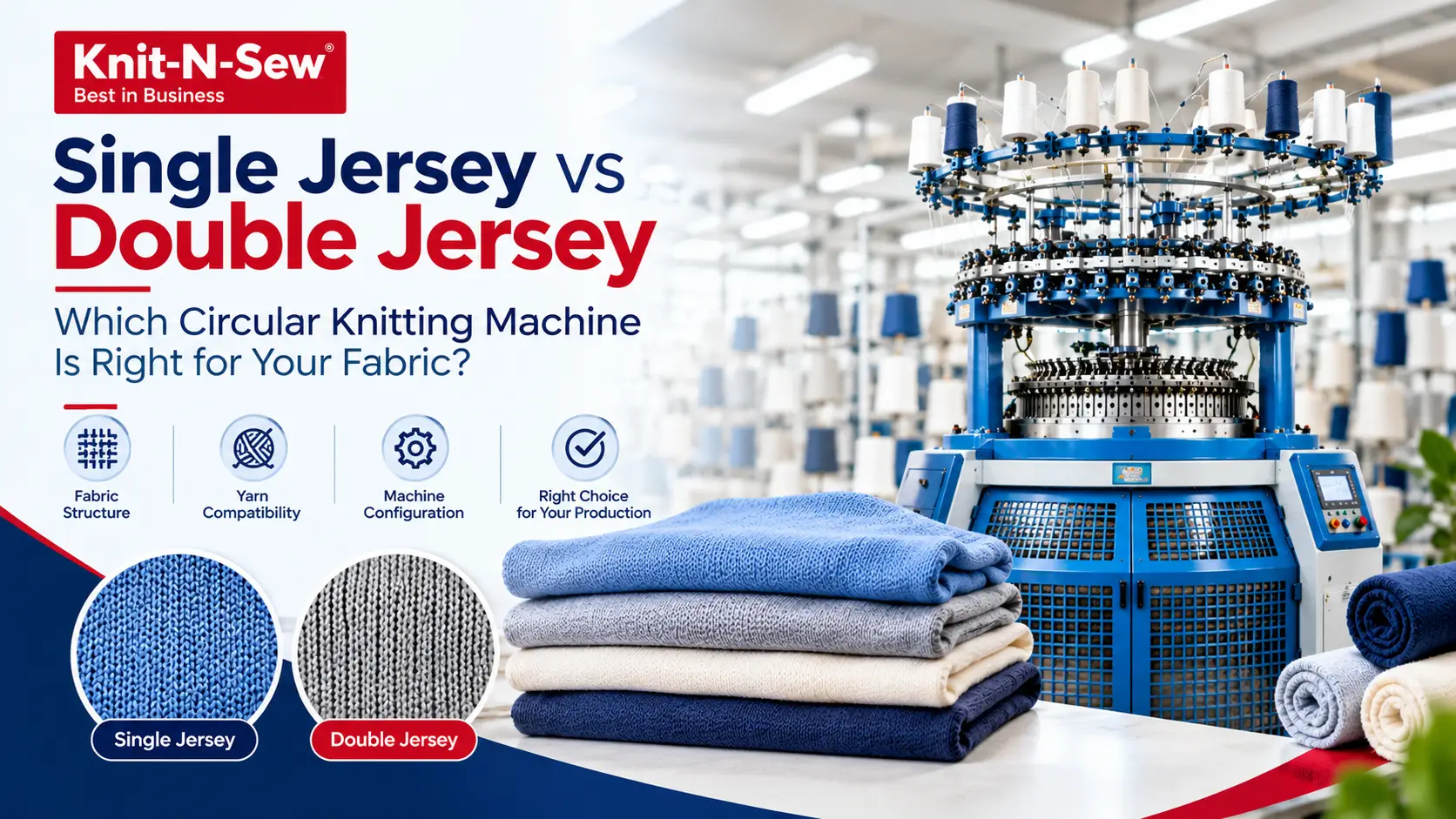
Single Jersey vs Double Jersey: Which Circular Knitting Machine Is Right for Your Fabric?
When selecting a circular knitting machine, understanding the difference between single jersey vs double jersey is important because the machine configuration directly influences the type of knitted fabric you can produce. Although both machine types are widely used in textile manufacturing, they are designed for different fabric structures, thicknesses, stretch characteristics, and applications.
A single jersey circular knitting machine is commonly used for lightweight and versatile knitted fabrics such as T-shirt fabric, innerwear, casual wear, and other single-knit applications. A double jersey circular knitting machine, on the other hand, is designed for double-knit structures and can be used for fabrics such as interlock, rib, pique, and other applications requiring different construction and performance characteristics.
The right choice depends on more than the machine name. Fabric structure, yarn type, gauge, machine diameter, required GSM, stretch, production volume, and end application should all be considered before investing in a machine.
In this guide, we explain the difference between single jersey and double jersey machines, their applications, advantages, limitations, and the key factors textile manufacturers should consider before making a purchase.
What Is Single Jersey?
Single jersey is a knitted fabric structure produced using a single set of needles. In circular knitting production, a single jersey circular knitting machine is configured to form loops primarily through one needle cylinder.
This construction is widely used because it can produce lightweight, flexible, and comfortable fabrics suitable for many everyday garments.
Common applications include:
- T-shirt fabric
- Innerwear
- Casual wear
- Lightweight sportswear
- Nightwear
- Fashion garments
- Hosiery and other knitted products
Knit N Sew’s specifically positions its single jersey circular knitting machines for lightweight fabrics used in T-shirts, innerwear, and casual wear.
Key Characteristics of Single Jersey Fabric
Single jersey fabrics are generally known for:
- A relatively lightweight construction
- Good stretch and recovery depending on yarn and fabric settings
- A smooth face and different appearance on the reverse side
- Comfortable hand feel
- Efficient production for many lightweight fabric applications
However, the final fabric properties are not determined by machine type alone. Yarn count, fibre composition, stitch length, gauge, machine diameter, and finishing processes can significantly affect the finished fabric.
What Is Double Jersey?
Double jersey refers to knitted fabric structures produced using two needle beds or needle arrangements. In circular knitting machinery, this is commonly achieved through a cylinder-and-dial configuration.
A double jersey circular knitting machine can produce a wider range of fabric constructions than a basic single jersey setup. Depending on the machine configuration, manufacturers can produce structures such as:
- Interlock
- Rib
- Pique
- Double-knit fabrics
- Other structured knitted fabrics
Knit N Sew currently lists double jersey circular knitting machines for applications including rib, interlock, and pique fabrics.
Key Characteristics of Double Jersey Fabric
Depending on the construction, double jersey fabrics can offer:
- More balanced fabric structure
- Greater dimensional stability in many constructions
- Different thickness and weight possibilities
- Reversible or similar-looking surfaces in some structures
- Suitability for structured garments and performance applications
Because “double jersey” covers multiple fabric constructions, the exact characteristics depend on whether the machine is producing interlock, rib, pique, or another structure.
Single Jersey vs Double Jersey: Key Differences
The main difference between single jersey and double jersey is the fabric construction and needle arrangement used during knitting.
| Factor | Single Jersey | Double Jersey |
| Basic construction | Single-knit structure | Double-knit structure |
| Needle arrangement | Primarily one needle cylinder | Cylinder and dial / two needle arrangements |
| Typical fabric | Lightweight single jersey | Interlock, rib, pique and other double-knit structures |
| Fabric weight | Often lightweight, depending on settings | Can support medium to heavier structures |
| Surface | Face and reverse can look different | Some constructions offer more balanced surfaces |
| Common applications | T-shirts, innerwear, casual wear | Sportswear, structured garments, rib and interlock fabrics |
| Machine selection | Based on single-knit requirements | Based on required double-knit structure |
| Main consideration | Fabric type and lightweight production | Structure, stability, thickness and application |
The table is a general production guide. Actual fabric properties depend on machine specifications, gauge, yarn, stitch length, fabric construction, and finishing.
Single Jersey vs Double Jersey Machine: How Do They Work Differently?
The biggest technical difference is the needle arrangement used to create the fabric.
In a single jersey machine, the knitting process primarily uses one needle cylinder. The needles move according to the cam arrangement and form loops that create the single-knit structure.
In a double jersey machine, the machine uses two interacting needle arrangements, commonly referred to as the cylinder and dial. This gives the machine greater flexibility for creating different loop formations and fabric structures.
This difference is important because manufacturers should select the machine based on the fabric construction they intend to produce, rather than simply choosing a machine because it has a higher speed or larger diameter.
Which Fabrics Can Be Made on a Single Jersey Machine?
Single jersey machines are commonly selected when the production requirement focuses on lightweight knitted fabrics.
Typical examples include:
T-Shirt Fabric
Single jersey is widely used for T-shirts because it can provide a lightweight and comfortable fabric construction. The final GSM, stretch, drape, and hand feel depend on yarn selection and machine settings.
Innerwear Fabric
Lightweight single jersey is also commonly used in innerwear applications where softness, comfort, and stretch are important.
Casual Wear
Many casual garments use single jersey because of its versatility and comfortable knitted structure.
Lightweight Sportswear
Depending on yarn, gauge, finishing, and fabric construction, single jersey can also be used for selected sportswear applications.
If your main requirement is lightweight T-shirt or innerwear fabric, a single jersey circular knitting machine may be relevant to your production setup. The exact machine specification should still be selected according to the required fabric construction and production target.
Which Fabrics Can Be Made on a Double Jersey Machine?
Double jersey machines are useful when the manufacturer needs more structured knitted constructions.
Interlock Fabric
Interlock is a double-knit structure known for its relatively smooth and stable construction. It is used in garments where a more substantial fabric feel may be required.
Rib Fabric
Rib structures are commonly used for cuffs, collars, waistbands, and garments requiring stretch and recovery.
Pique Fabric
Certain double-knit machine configurations can be used to produce pique structures for apparel and other textile applications.
Structured Sportswear
Depending on the machine configuration, yarn, gauge, and fabric design, double-knit machines can support various sportswear and performance fabric requirements.
Knit N Sew’s current machine range includes circular knitting equipment for interlock and other specialized structures, and its used-machine inventory also lists interlock and rib machines with different gauge, diameter, and feeder configurations.
Single Jersey vs Double Jersey: Which One Should You Choose?
There is no universal machine configuration that suits every textile manufacturer. The appropriate choice depends on the fabric you need to produce.
Consider a single jersey circular knitting machine when your production focuses primarily on:
- T-shirt fabrics
- Lightweight fabrics
- Innerwear
- Casual garments
- Single-knit structures
- High-volume lightweight fabric production
Consider a double jersey circular knitting machine when your production requires:
- Interlock fabric
- Rib fabric
- Pique structures
- Double-knit fabrics
- More structured fabric constructions
- Applications where fabric stability or thickness is important
The decision should ultimately be based on the required fabric structure rather than simply comparing machine price or production speed.
Gauge Matters in Single Jersey and Double Jersey Machines
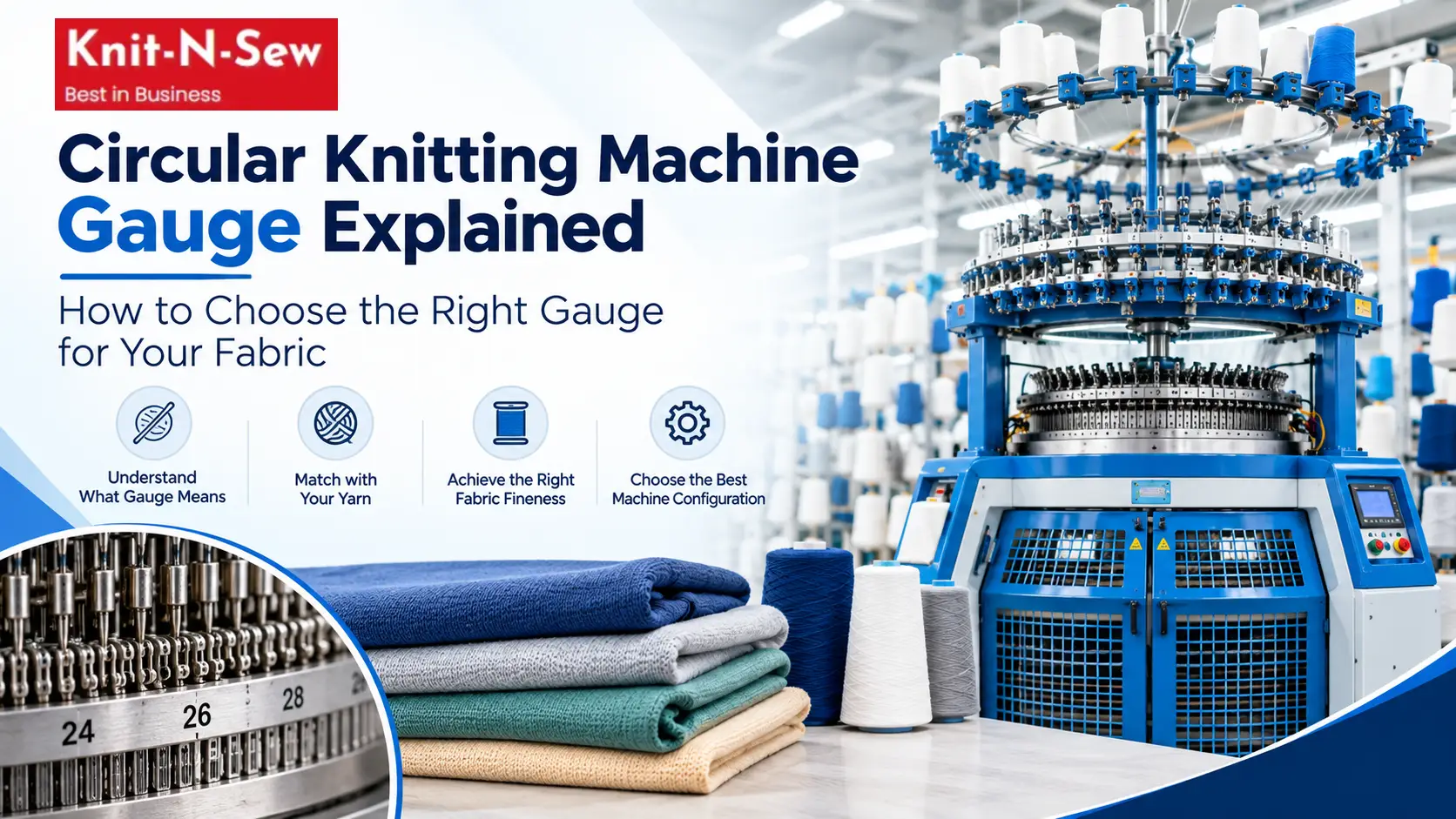
Gauge is another important specification when selecting a circular knitting machine.
In simple terms, machine gauge relates to the needle density within the knitting system. Higher gauges generally have more closely spaced needles and are associated with finer knitting possibilities, while lower gauges have wider needle spacing and are generally associated with coarser structures.
However, gauge does not independently determine fabric GSM or quality.
For example, two machines with similar gauge specifications can produce fabrics with different GSM or hand feel because of differences in:
- Yarn count
- Fibre composition
- Stitch length
- Fabric construction
- Machine diameter
- Knitting settings
- Finishing process
This is why manufacturers should evaluate gauge together with the intended fabric application.
For a deeper explanation, see our guide on circular knitting machine gauge.
Machine Diameter Also Affects Your Selection
Machine diameter is another important specification when purchasing circular knitting equipment.
Diameter describes the nominal size of the needle cylinder and influences the production width and machine configuration. The appropriate diameter depends on the required fabric width, garment application, machine type, and production requirements.
A manufacturer comparing single jersey and double jersey machines should therefore evaluate:
Fabric structure + Gauge + Diameter + Yarn + Stitch length + Production requirement
rather than comparing only one specification.
Single Jersey vs Double Jersey for T-Shirt Fabric
One of the most common questions textile manufacturers ask is:
Which is better for T-shirt fabric — single jersey or double jersey?
The answer depends on the type of T-shirt fabric being manufactured.
For lightweight, conventional T-shirt fabrics, a single jersey circular knitting machine is commonly considered because single jersey construction is widely used for lightweight apparel.
However, T-shirt manufacturers may also use different knitted structures depending on the desired fabric weight, appearance, stability, stretch, and garment specification.
Therefore, instead of selecting a machine based only on the phrase “T-shirt fabric,” define:
- Target GSM
- Yarn count
- Fibre composition
- Required width
- Fabric construction
- Stretch requirement
- Production quantity
- Finishing requirement
This information makes machine selection considerably more accurate.
Single Jersey vs Double Jersey for Sportswear
Sportswear production can involve both single and double-knit fabrics.
Single jersey may be suitable for lightweight sportswear where flexibility and low fabric weight are required.
Double-knit structures may be preferred for applications requiring a more structured or stable fabric construction.
The correct selection depends on the exact sportswear product and fabric specification. A manufacturer producing lightweight performance T-shirts may have different machinery requirements from one producing heavier structured sportswear.
New vs Used Single Jersey and Double Jersey Machines
Manufacturers do not always need to purchase a brand-new machine.
A used circular knitting machine can be an option when investment cost, availability, or expansion requirements make pre-owned equipment suitable.
However, used machinery should be evaluated carefully. Important checks include:
- Machine brand and model
- Manufacturing year
- Gauge
- Diameter
- Number of feeders
- Needle and sinker condition
- Cylinder and dial condition
- Cam condition
- Motor and drive system
- Fabric output quality
- Machine running condition
- Availability of replacement parts
- Installation and technical support
Knit N Sew’s current used-machine inventory includes different circular knitting configurations, including interlock, rib, and jacquard machines with specified gauges, diameters, feeder counts, brands, and model years.
For buyers considering pre-owned machinery, see our used circular knitting machines range.
Common Mistakes When Choosing Between Single Jersey and Double Jersey
Choosing Based Only on Price
The cheapest machine may not be suitable for the required fabric. Machine configuration should match the intended production.
Choosing Based Only on Speed
Higher machine speed does not automatically mean better production for every application. Fabric quality, machine stability, yarn compatibility, and production requirements also matter.
Ignoring Gauge
Gauge affects the needle arrangement and should be considered alongside yarn and fabric construction.
Ignoring Fabric Structure
A manufacturer should clearly define whether the requirement is single jersey, interlock, rib, pique, or another structure before selecting machinery.
Not Checking Spare-Part Availability
Long-term machine operation depends partly on the availability of compatible replacement components and technical support.
Buying a Used Machine Without Inspection
Used machinery should be inspected and test-run where possible. Machine condition can have a direct impact on production reliability and fabric quality.
How to Choose the Right Circular Knitting Machine
Before requesting a machine quotation, prepare the following information:
- Fabric type: Single jersey, interlock, rib, pique, etc.
- Application: T-shirt, innerwear, sportswear, casual wear, and so on.
- Yarn: Fibre type and yarn count.
- Target GSM: Approximate finished fabric weight.
- Required fabric width: Finished or open-width requirement.
- Gauge: Based on the intended fabric construction.
- Machine diameter: Based on production requirements.
- Production target: Required output per day or month.
- Budget: New or used machinery investment range.
- After-sales requirements: Installation, technical support, and spare parts.
Providing these specifications allows a machinery supplier to understand the actual requirement instead of recommending a machine based on a single keyword or specification.
Why Choose Knit N Sew for Knitting Machinery?
Knit N Sew Enterprises has been serving the knitting and textile machinery industry since 1998 and offers circular knitting machines, used knitting machines, flat knitting machines, knitting machine spare parts, needles, and sinkers.
For textile manufacturers evaluating single jersey and double jersey machinery, the important step is to match the machine configuration with the intended fabric application. Knit N Sew’s product range includes machinery for different knitting structures and applications, along with related components and spare-parts solutions.
Whether you are planning to produce T-shirt fabric, innerwear, sportswear, interlock, rib, or other knitted fabrics, share your fabric specifications, yarn details, required GSM, width, gauge, and production target before finalizing the machine.
Frequently Asked Questions
What is the difference between single jersey and double jersey?
Single jersey uses a single-knit construction, while double jersey uses two needle arrangements to create double-knit structures. Single jersey is commonly associated with lightweight fabrics, while double jersey machines can produce structures such as interlock and rib.
Is single jersey better than double jersey?
Neither machine type is universally suitable for every application. The appropriate choice depends on the required fabric structure, yarn, GSM, stretch, width, production target, and end use.
Which machine is used for T-shirt fabric?
Single jersey circular knitting machines are commonly used for lightweight T-shirt fabrics. However, the exact machine specification depends on yarn, gauge, GSM, fabric construction, width, and production requirements.
Which machine is used for interlock fabric?
Interlock fabric is produced using a double-knit machine configuration designed for interlock construction. Machine gauge, diameter, feeders, and other specifications should be selected according to the required fabric.
What is the difference between single jersey and interlock fabric?
Single jersey is a single-knit construction with a different appearance between the face and reverse in many cases. Interlock is a double-knit construction that generally provides a more balanced and stable fabric structure.
Does double jersey mean interlock?
Not necessarily. Double jersey is a broader category of double-knit construction. Depending on machine configuration, it can include structures such as interlock, rib, pique, and other knitted constructions.
Does machine gauge affect single jersey and double jersey fabric?
Yes, gauge is an important machine specification for both types. However, gauge alone does not determine the final GSM, thickness, stretch, or quality. Yarn, stitch length, machine configuration, and finishing also influence the finished fabric.
Can I buy a used single jersey or double jersey machine?
Yes, used circular knitting machines can be an option for manufacturers looking to manage machinery investment. The machine should be inspected for gauge, diameter, condition, fabric output, needles, sinkers, drive system, and other important components before purchase.