
Table of Contents
ToggleOver time, the textile and hosiery sector has changed dramatically, with manufacturers being able to make high-quality materials more quickly thanks to sophisticated machinery. The circular knitting machine stands out among these inventions as one of the most crucial pieces of machinery for the manufacturing of cloth. Knowing how circular knitting machines operate will help you make wise selections, whether you’re trying to launch a knitting unit or grow your textile company.
Knit-N-Sew is a reputable brand among India for circular knitting machines manufactures since we specialize in offering dependable knitting solutions. Beginners will learn the basics of circular knitting machines, their parts, their uses, and how to select the best machine for their requirements with the aid of this book.
What is a Circular Knitting Machine?
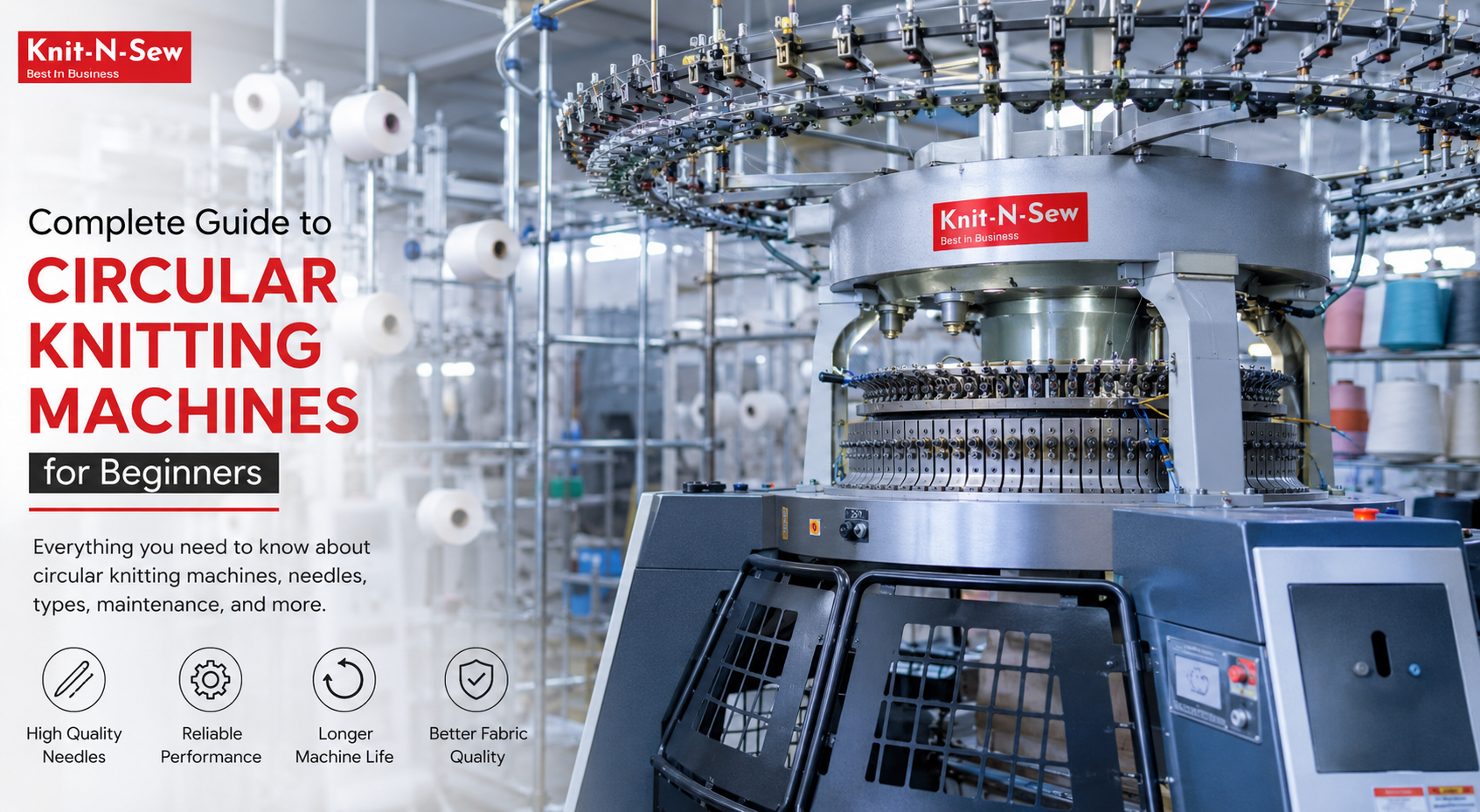
A specialized textile machine called a circular knitting machine is used to create continuous tubular knitted materials. Circular knitting machines employ a circular configuration of needles fixed on a revolving cylinder, in contrast to flat knitting machines. High-speed production and effective fabric manufacture are made possible by this design.
These devices are frequently used to make textiles for:
- T-shirts
- Sportswear
- Underwear
- Socks
- Sweaters
- Textiles used in industry
- Fashionable clothing
Circular knitting machines are becoming more and more in demand as textile producers look for increased productivity and reliable fabric quality.
How Does a Circular Knitting Machine Work?
A circular knitting machine can be operated rather simply. A number of needles placed in a circular cylinder are used by the machine. Knitted cloth is produced by the needles interlocking yarn loops while the cylinder rotates.
- The procedure entails:
- Yarn is fed into the machine.
- Yarn loops are formed using needles.
- Loops are constantly interconnecting.
- As production proceeds, the fabric is being pulled downward.
High-volume fabric production with little operator intervention is made possible by this continuous process.
Key Components of a Circular Knitting Machine
Beginners can use and maintain the equipment more successfully if they are aware of the main components.
1. Needles
The needle system is the central component of every knitting machine. For fabric formation, stitch consistency, and overall production efficiency, high-quality circular knitting machine needles are essential.
Needles that are worn out or of poor quality might result in:
- Defects in the fabric
- Stitches that dropped
- Breakage of yarn
- Decreased output
Maintaining fabric quality requires routine needle replacement and examination.
2. Cylinder
During operation, the cylinder, which contains the needles, rotates continually. The machine’s capacity to produce fabric is determined by varying cylinder diameters.
3. Sinkers
During the knitting process, sinkers help needles grip and release yarn loops.
4. The Yarn Feeding System
Smooth and reliable yarn supply to the needles is guaranteed by the yarn feeding mechanism.
5. The Cam System
The cam mechanism establishes stitch creation patterns and regulates needle movement.
Types of Circular Knitting Machines
Single Jersey Circular Knitting Machines
These devices create lightweight textiles that are frequently utilized in:
- T-shirts
- Casual attire
- Sportswear
Circular Double Jersey Knitting Machines
Intended to provide more durable, thicker fabrics that are appropriate for:
- Coats
- Sweatshirts
- Clothes for the winter
- Machines for Knitting Ribs
These devices create stretchy textiles that are utilized in:
- Handcuffs
- Collars
- Bands around the waist
- Knitting machines that interlock
Interlock materials are perfect for high-end clothing because of their exceptional smoothness and durability.
Benefits of Circular Knitting Machines
High Production Speed
Circular knitting machines are perfect for commercial textile operations because they can quickly manufacture large quantities of cloth.
Consistent Fabric Quality
Consistency in fabric and uniform stitch formation are guaranteed by cutting-edge technology.
Cost Efficiency
Automation boosts production efficiency and lowers the need for workers.
Versatility
Different types of yarn and fabric designs can be handled by modern machinery.
Reduced Waste
During production, precise yarn consumption reduces material waste.
Why Ludhiana is a Major Hub for Circular Knitting Machines
Known as India’s “hosiery capital,” Ludhiana has developed into a hub for innovative technology and textile production. Easy access to machine suppliers, replacement parts, technical support, and qualified experts is advantageous for businesses searching for a circular knitting machine in Ludhiana.
The city is a great place for firms looking for dependable knitting equipment and industry knowledge because of its robust textile ecosystem.
New vs Used Circular Knitting Machine: Which Should You Choose?
To lower their initial investment expenses, many startups and small-scale manufacturers think about buying a used circular knitting machine.
Benefits of Used Equipment
- Reduced cost of buying
- Quicker return on investment
- Ideal for new businesses
Availability of validated machine models
- Benefits of New Machines
- The newest technology
- Increased energy efficiency
- Manufacturer’s guarantee
- Reduced need for maintenance
Prior to buying a used machine, check:
- state of the needle
- Wear on cylinders
- Age of machines
- History of production
- Availability of spare parts
Working with credible providers guarantees that used equipment will continue to be dependable and effective.
Importance of Machine Maintenance
Machine longevity and output quality are greatly increased by proper maintenance.
Tips for Maintenance
- Regularly clean the machines.
- Keep moving parts lubricated.
- Replace any damaged needles right away.
- Keep an eye on the yarn tension.
- Check sinkers and cams on a regular basis.
- Plan routine maintenance inspections.
- Regular maintenance lowers downtime and avoids expensive repairs.
How to Choose the Right Circular Knitting Machine
When selecting a machine, consider:
Requirements for Production
Establish the volume of productivity you anticipate each day.
Type of Fabric
Select a machine made specifically for the fabrics you plan to produce.
Diameter and Gauge of the Machine
The output and texture of the fabric are impacted by different requirements.
Availability of Spare Parts
Make sure that replacement parts, particularly circular knitting machine needles and other necessary parts, are easily accessible.
Reputation of the Supplier
Better product quality, technical assistance, and long-term dependability are guaranteed when you collaborate with seasoned circular knitting machine manufacturers.
Why Choose Knit-N-Sew?
Knit-N-Sew is dedicated to providing top-notch knitting equipment, authentic replacement parts, and professional advice to textile makers. Our team assists companies in finding the ideal solution for their production objectives, whether they require a new machine, a used circular knitting machine, or high-end circular knitting machine needles.
We continue to assist enterprises searching for a reliable and around India thanks to our vast industry experience and robust position in the textile sector.
Conclusion
The foundation of contemporary textile production is circular knitting machines. To achieve effective manufacturing and excellent fabric quality, it is crucial to comprehend their components, performance, and maintenance needs. Selecting the appropriate equipment can have a big impact on efficiency and profitability, regardless of whether you’re a newcomer to the textile business or an established firm looking to modernize operations.
Businesses may obtain dependable equipment, knowledgeable assistance, and long-term value that supports sustainable growth in the cutthroat textile sector by collaborating with reputable circular knitting machine manufacturers like Knit-N-Sew.
Frequently Asked Questions (FAQs)
1. What is a circular knitting machine used for?
Tubular knitted materials for clothing like T-shirts, athletics, undergarments, socks, and fashion apparel are made using a circular knitting machine.
2. How long do circular knitting machine needles last?
Production volume, yarn quality, and maintenance procedures all affect longevity. Maintaining fabric quality is aided by timely replacement and routine inspection.
3. Is buying a used circular knitting machine a good investment?
Indeed, if a used circular knitting machine is properly inspected and maintained, it might be an affordable choice for startups and small textile firms.
4. Why is Ludhiana famous for circular knitting machines?
India’s top hub for the production of textiles and hosiery, Ludhiana provides a large selection of equipment, replacement parts, trained labor, and technical assistance.
5. How do I choose the right circular knitting machine?
Before making a purchase, take into account the kind of fabric, production capacity, machine diameter, feeder count, needle quality, availability of spare parts, and supplier reputation.
6. How often should knitting machine needles be replaced?
To preserve the best possible manufacturing quality, needles should be changed anytime wear, bending, breakage, or fabric flaws show up.
7. What are the benefits of purchasing from experienced circular knitting machine manufacturers?
For textile operations, reputable manufacturers offer superior machine quality, technical assistance, spare part availability, and long-term dependability.
To know more about “Why Upgrading Knitting Machine Parts Can Increase Output Faster Than You Think” go to our previous blog.