
Table of Contents
ToggleTable of Contents
- Introduction
- Understanding Circular Knitting Machines
- Why Choosing the Right Machine Matters
- Factors to Consider Before Buying a Circular Knitting Machine
- Production Requirements
- Fabric Type
- Machine Diameter
- Gauge Selection
- Speed and Productivity
- Automation Features
- Energy Efficiency
- Spare Parts Availability
- Maintenance Requirements
- Single Jersey vs Double Jersey Circular Knitting Machines
- Benefits of Investing in a Quality Circular Knitting Machine
- Why Ludhiana is a Leading Hub for Circular Knitting Machines
- How Knit-N-Sew Helps Textile Manufacturers
- Common Mistakes to Avoid When Buying a Circular Knitting Machine
- Conclusion
- Frequently Asked Questions
The textile industry is perpetually changing, and producers are always searching for methods to increase production output, fabric quality, and efficiency. Choosing the appropriate circular knitting machine is one of the most crucial expenditures for any textile manufacturing facility. Selecting the right equipment can have a big impact on efficiency and profitability, whether you are beginning a new textile company or modernizing your current manufacturing line.
It might be difficult to choose the best equipment because there are so many different machine models, features, and technologies on the market. Making an informed choice requires knowing your production requirements and equipment capabilities.
This guide will assist you in understanding the important aspects to take into account before making an investment if you are looking for a dependable circular knitting machine in Ludhiana.
Understanding Circular Knitting Machines
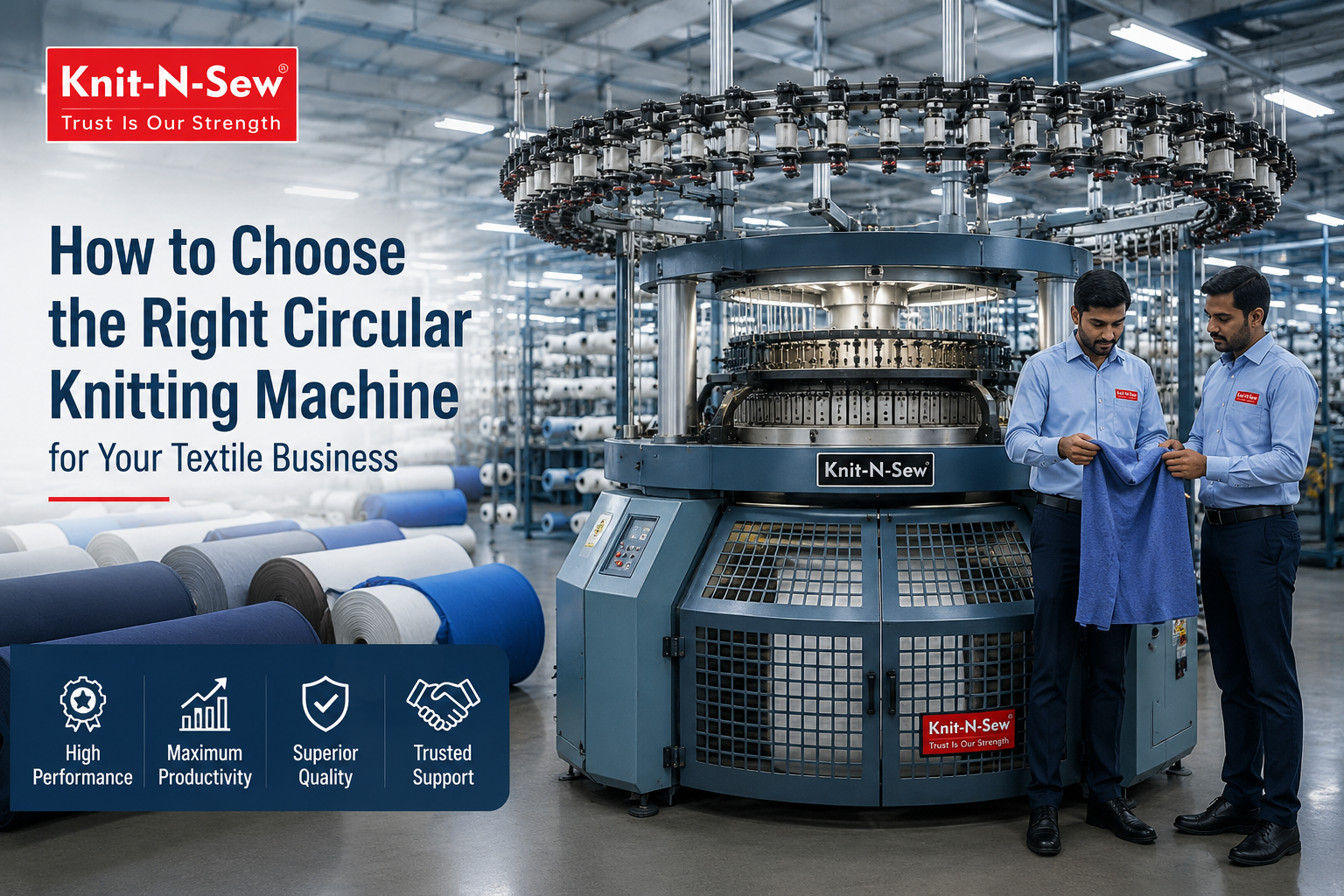
A specialized textile machine called a circular knitting machine is used to create continuous tubular knitted materials. The manufacturing of clothing, athletics, undergarments, hosiery, household textiles, and technical materials all make extensive use of these machines.
Circular knitting machines, in contrast to flat knitting machines, use needles organized in a circular cylinder to produce cloth quickly and consistently.
Contemporary circular knitting machines come equipped with cutting-edge features like:
- High-speed functioning
- Systems for automated monitoring
- decreased flaws in the fabric
- Performance that uses less energy
- Improved capacity for production
They are a crucial component of the modern textile manufacturing sector because of these benefits.
Why Choosing the Right Machine Matters
It takes more than just buying equipment to choose the best circular knitting machine. It is about making investments in your company’s future expansion.
Using the incorrect machine can result in:
- Reduced output
- Higher upkeep expenses
- Low-quality fabric
- Frequent malfunctions in machines
- Increased operating costs
However, the appropriate device can:
- Boost the effectiveness of production
- Improve the uniformity of the fabric
- Cut down on waste
- Boost revenue
- Encourage the growth of your company
Therefore, it is essential to carefully consider your needs before making a purchase.
Factors to Consider Before Buying a Circular Knitting Machine
1. Understand Your Production Requirements
Setting your production objectives is the first step.
Consider this:
- What kind of fabric are you going to make?
- What is your goal for everyday production?
- Which sectors would you cater to?
- What plans do you have for future growth?
Those that make T-shirts and casual clothing could need different machine requirements than those that make athletic or technical fabrics.
A machine should be able to handle future expansion in addition to your present production requirements.
2. Choose the Right Fabric Type
Certain circular knitting machines are made for particular types of fabrics.
Typical fabric kinds consist of:
- Jersey Fabric by itself
- Jersey Fabric in Double
- Interlocking Fabric with Ribs
- Pique Textile
- Fabric Fleece
The machine configuration you want will depend on your fabric requirements.
For instance:
While double jersey machines work better with thicker, more durable textiles, single jersey machines are best suited for lighter fabrics.
3. Select the Appropriate Machine Diameter
Fabric dimensions and production output are directly impacted by machine diameter.
Typical machine dimensions are between:
- Twenty inches
- 24 inches
- 28 inches
- Thirty inches
- 34 inches
- 36 inches
Larger diameters are appropriate for large-scale production processes since they often yield bigger fabric volumes.
When choosing diameter, take into account:
- Volume of production
- Requirements for fabric width
- Factory area that is available
4. Understand Machine Gauge
The quantity of needles per inch is known as gauge, and it has a significant impact on the texture and quality of cloth.
For instance:
- Lower Gauge: Coarser textiles (16G–20G)
- Medium Gauge (24G–28G): Textiles used in general clothing
- Higher Gauge (32G–40G): Exquisite textiles
The gauge should match the specifications of the intended product.
Inappropriate fabric structures and lower product quality can arise from choosing the incorrect gauge.
5. Evaluate Speed and Productivity
Contemporary circular knitting machines are made to run quickly without sacrificing the uniformity of the cloth.
Examine the following while comparing machines:
- RPM capability
- Efficiency of production
- Daily production of fabric
- Frequency of downtime
Although production volume can be greatly increased by increasing speed, quality should never be sacrificed.
The best outcomes are obtained when speed and accuracy are balanced.
6. Consider Automation Feature
The production of textiles is changing due to technology.
These days, modern machines consist of:
- Systems for automatic lubrication
- Detectors for yarn breaks
- Systems for monitoring fabrics
- Control panels that are digital
- Software for production management
- Automation boosts production efficiency and lowers human error.
Manufacturers can maintain their competitiveness in the expanding textile market by investing in cutting-edge technologies.
7. Check Energy Efficiency
A large amount of the costs associated with textile manufacturing are related to energy.
A machine that uses less energy can:
- Cut back on your use of power
- Reduced operating expenses
- Boost sustainability
- Boost long-term financial success
When assessing a machine, inquire about:
- Motor effectiveness
- Consumption of power
- Technologies that save energy
Energy-efficient versions frequently offer better long-term returns, despite possibly having a higher initial cost.
8. Availability of Spare Parts
Even the most sophisticated machines need to be maintained and occasionally have parts replaced.
Make sure spare parts are easily accessible before making a purchase.
Crucial elements consist of:
- Needles for knitting
- Sinkers
- Cylinders
- Cam systems
- Belts for feeders
Continuous production is ensured and downtime is reduced with dependable access to spare parts.
Knit-N-Sew provides high-quality knitting machine parts and accessories to effectively assist textile producers.
9. Maintenance Requirements
Maintaining a machine is essential to its longevity and functionality.
Select a device that provides:
- Simple access to maintenance
- Unambiguous service standards
- Availability of technical assistance
- Sturdy parts
Frequent maintenance can increase overall efficiency and avoid expensive malfunctions.
Better operating efficiency is frequently achieved by a machine that requires less maintenance.
Single Jersey vs Double Jersey Circular Knitting Machines
Understanding the difference between these two machine types is essential.
| Feature | Single Jersey Machine | Double Jersey Machine |
|---|---|---|
| Fabric Thickness | Light | Medium to Heavy |
| Production Speed | Higher | Moderate |
| Fabric Structure | Single Layer | Double Layer |
| Application | T-Shirts, Casual Wear | Sportswear, Jackets |
| Machine Complexity | Lower | Higher |
Choose the machine type based on your target products and market demand.
Benefits of Investing in a Quality Circular Knitting Machine
A top-notch machine has many benefits:
Enhanced Fabric Quality:- Superior fabric durability and attractiveness are achieved through consistent stitch formation.
Enhanced Efficiency:- Large volumes of fabric can be produced in shorter manufacturing cycles thanks to advanced machinery.
Decreased Downtime:- Reliable equipment enhances operational efficiency and reduces disruptions.
Increased Return on Investment:- Premium machines frequently produce superior long-term profitability despite requiring a larger initial expenditure.
Increased Client Contentment:- Superior textiles aid producers in forging closer bonds with consumers and enhancing their reputation.
Why Ludhiana is a Leading Hub for Circular Knitting Machines
One of India’s top hubs for textile production is Ludhiana.
The city is renowned for:
- robust infrastructure for textiles
- competent labor force
- extensive network for the knitting industry
- Simple access to equipment and replacement parts
- Expanding prospects for exports
Businesses are looking for a dependable circular knitting machine in Ludhiana to meet their production needs as the demand for knitted clothing keeps growing.
Additionally, the area offers superior assistance for locating an industrial circular knitting machine in Ludhiana, which makes it a top choice for textile producers across India.
How Knit-N-Sew Helps Textile Manufacturers
Knit-N-Sew is dedicated to providing high-quality machinery solutions, knitting needles, machine accessories, and technological know-how to textile businesses.
Our goal is to assist businesses:
- Boost the effectiveness of production
- Cut down on machine downtime
- Obtain high-quality machine parts
- Improve the quality of the fabric
- Attain long-term company expansion
Knit-N-Sew provides trustworthy solutions designed to meet the demands of contemporary textile manufacturing, whether you are building a new knitting unit or modernizing your current facility.
Common Mistakes to Avoid When Buying a Circular Knitting Machine
Many companies make expensive purchasing errors.
Steer clear of the following:
Purchasing Only Based on Cost:-The least expensive machine could lead to decreased output and increased maintenance expenses.
Ignoring Upcoming Growth
Select a machine that can accommodate expansion in the future.
Ignoring the Availability of Spare Parts
Significant manufacturing delays may result from restricted access to replacement parts.
Ignoring Technical Assistance
Long-term success depends on dependable post-purchase assistance.
Choosing the Incorrect Gauge
Fabric quality and market compatibility may be impacted by improper gauge selection.
Manufacturers can increase operational performance and optimize their investment by avoiding these errors.
Conclusion
One of the most crucial choices for every textile production company is selecting the appropriate circular knitting machine. The perfect machine should fit your budget, future expansion plans, fabric requirements, and production objectives.
Before making a purchase, it is important to carefully consider factors including machine diameter, gauge, speed, automation, energy economy, availability of spare parts, and maintenance requirements.
Working with a seasoned industry partner may streamline the selection process and guarantee long-term success for companies looking for a reliable circular knitting machine in Ludhiana or a sophisticated industrial circular knitting machine in Ludhiana.
Through dependable knitting solutions and industry knowledge, Knit-N-Sew is committed to assisting textile producers in achieving increased productivity, superior fabric quality, and sustainable growth.
Frequently Asked Questions (FAQs)
1. What is the purpose of a circular knitting machine?
Knitted fabrics in tubular form for clothing, sportswear, hosiery, home textiles, and industrial purposes are produced by a circular knitting machine.
2. How can I pick the best circular knitting machine?
Think about things like fabric type, production volume, machine gauge, diameter, speed, automation features, maintenance needs, and the availability of spare parts.
3. What distinguishes machines with single and double jerseys?
Double jersey machines create thicker, more structured fabrics, whilst single jersey machines create lighter fabrics.
4. What is the significance of gauge in a circular knitting machine?
Fabric quality, density, and texture are all determined by gauge. Selecting the appropriate gauge guarantees the intended fabric specifications.
5. Why should I get a circular knitting machine in Ludhiana?
With robust industry backing, knowledgeable suppliers, competent technicians, and quick access to equipment and spare parts, Ludhiana is a significant center for the textile industry.
6. What advantages may an industrial circular knitting machine in Ludhiana offer?
High production efficiency, better fabric quality, lower operating costs, and dependable support from the regional textile ecosystem are all provided by an industrial circular knitting machine in Ludhiana.